Kid mohair, silk, oyster shell, laser engraved vellum, russian birch
Coptic stitch book with box, sculpture
Kid mohair, silk, oyster shell, laser engraved vellum, russian birch
Coptic stitch book with box, sculpture
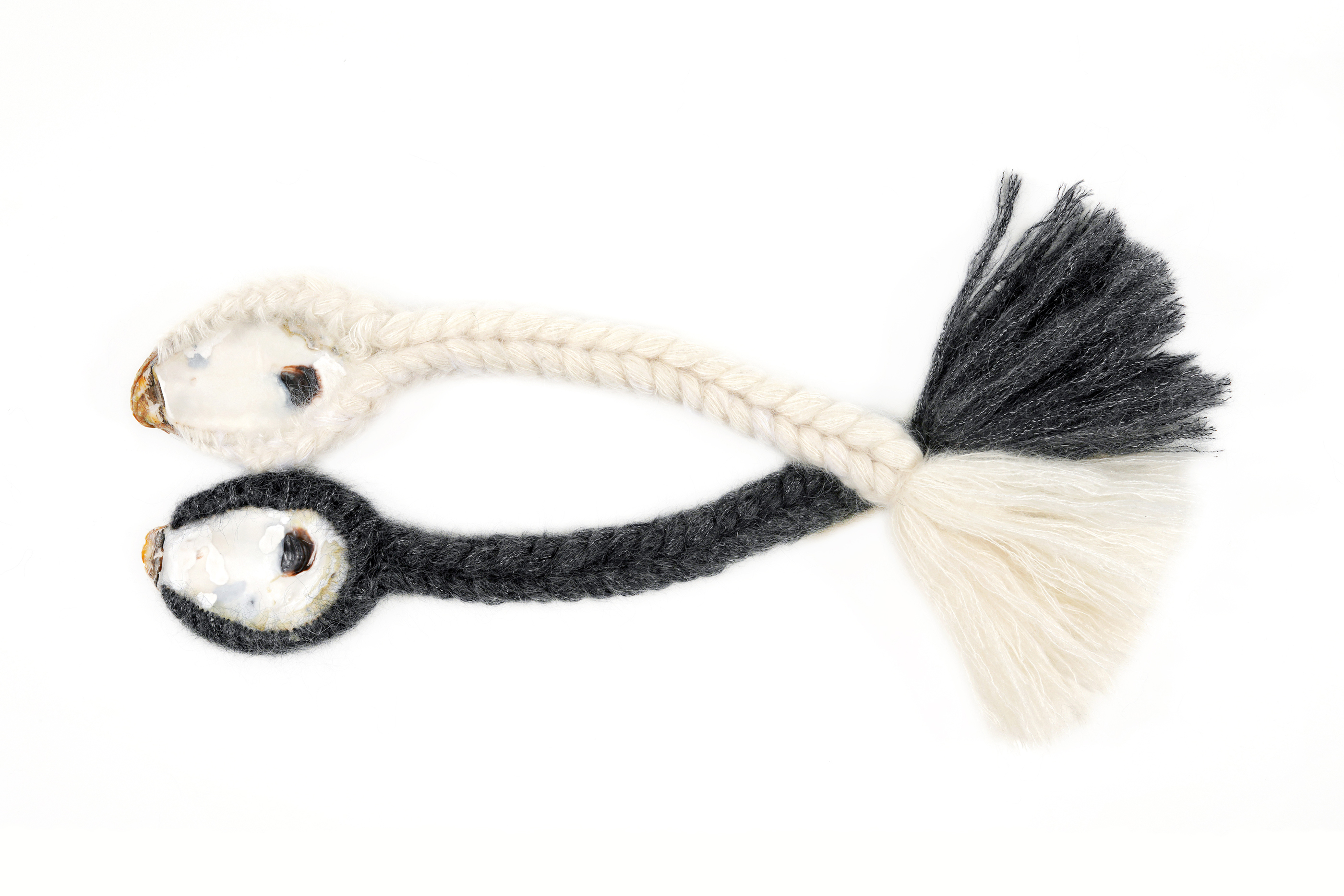
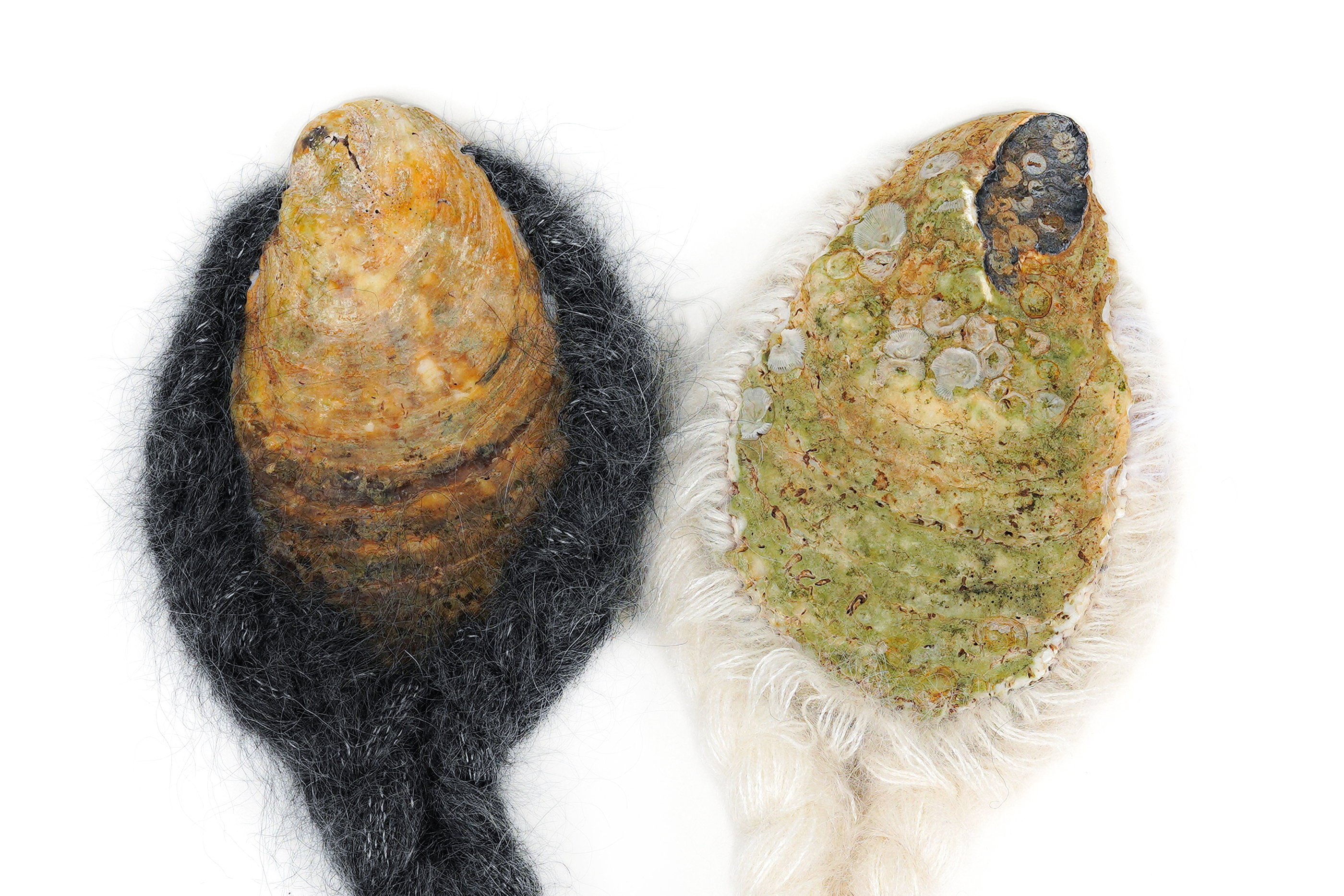
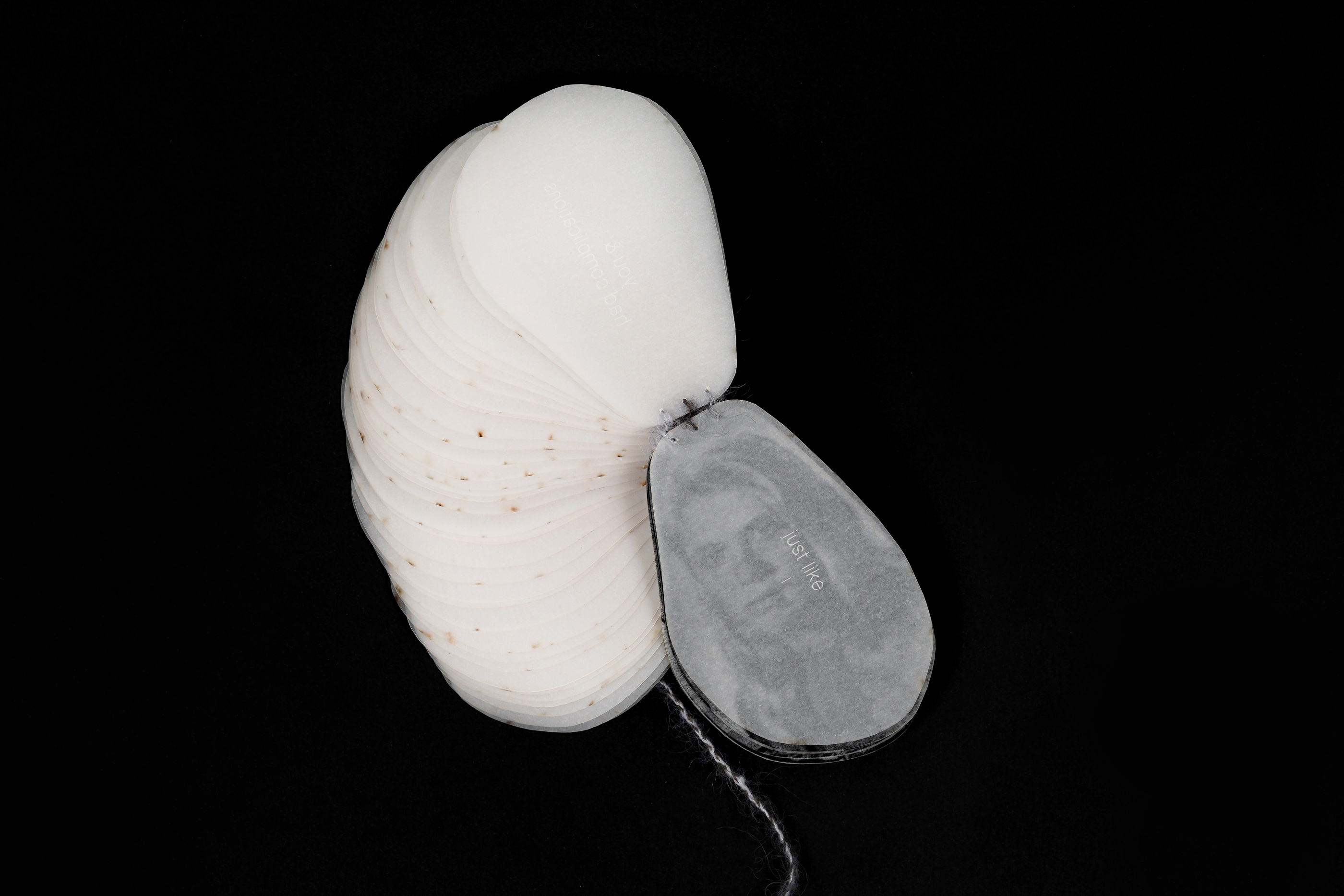
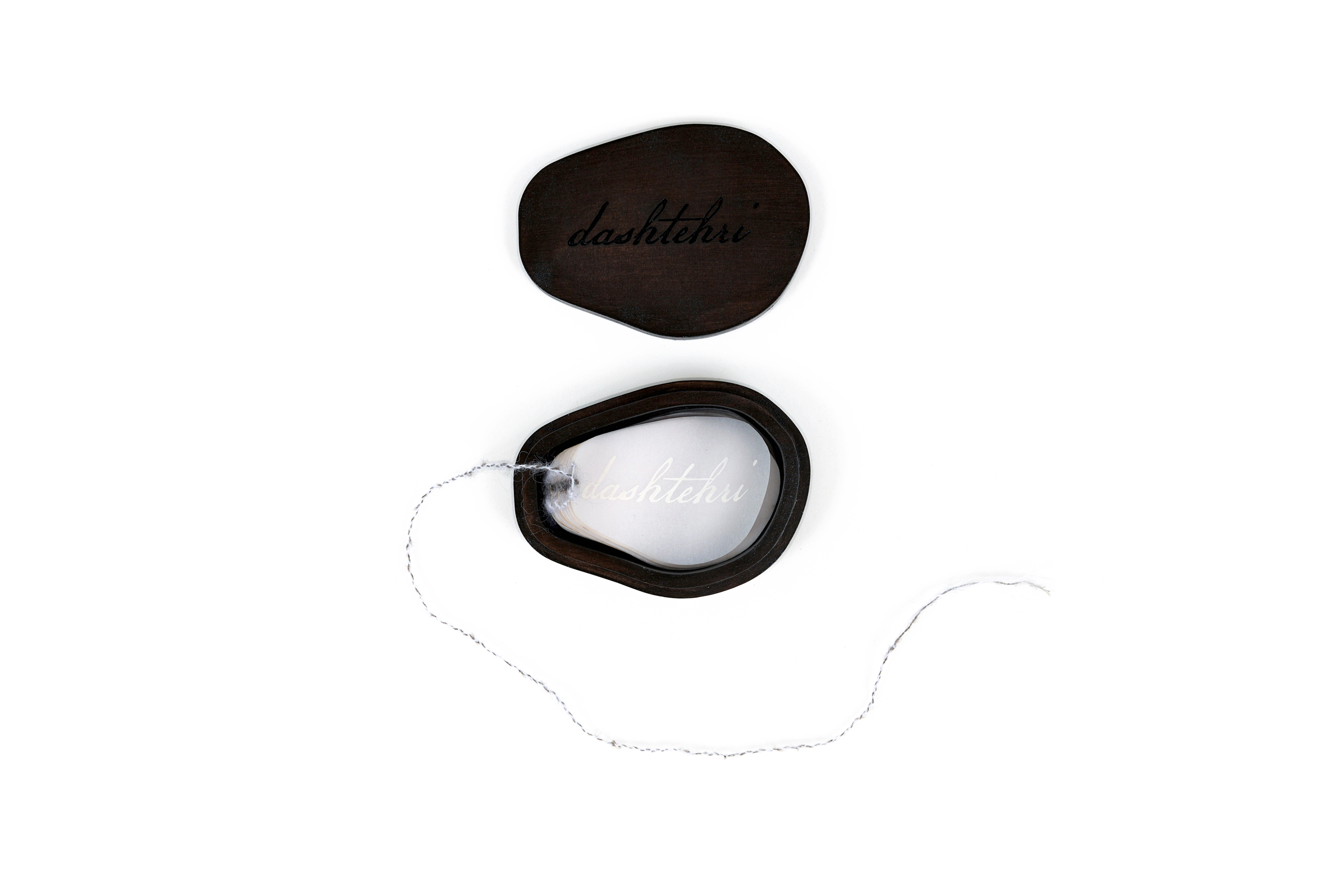
Two halves of an oyster, repetitively stranded with fibres which mirror the length of hair & tonality belonging to my mom & I. Their form resembles the martenitsa in Bulgarian culture, an adornment made of white & red yarn depicting human figures or braided strands. Kid silk mohair is coptic stitched along the spine using two white & one gray thread, braided into a tail which holds the pages in place. The book can fit between the shells, although it has a separate enclosure that echoes this form made of wood. Due to the translucency of vellum, each sentence can be read alone & can be combined with the page underneath or above.
Contents explore relationship dynamics between two generations of women on my mother’s side & myself. Words unsaid, yet undoubtedly experienced, & the reaction as well as questions. The last four pages are portraits; Baba & Mom, Mom & I when we were around the same age, captured in similar likeness. The portraits used for dashtehri are sourced from a family album dating back to the 1920s. This album was the only tangible memory, aside from a few books, my mom held on to when emigrating Bulgaria. We know little of that side of the family, or who remains. Many of the faces are unfamiliar, leaving us only a photograph for a story, or the hint of a shared feature in the bloodline.
Dashtehri means daughters in our language, phonetic spelling. This work seeks to connect generations of daughters through a personal account of stored trauma, which is verbally dealt & becomes suppressed in the passing of time & the passing of a mother. In one aspect, dashtehri questions the root of this reaction, the length of healing, & whether it perpetuates as a daughter becomes a mother. 2025.
you were a daughter
to a mother
[also a daughter]